How to Buy Secondhand Baby Clothes: The Ultimate Thrifting Guide
Babies outgrow clothes at a pace that borders on absurd. A newborn can blow through three size brackets in the first six months alone, leaving parents with mountains of barely-worn onesies and a lighter wallet. Buying secondhand is the smart answer, and I say that from experience, both as a writer who has covered consumer budgeting for years and as someone who has personally filled a dresser drawer for under $40.
This guide walks you through every stage of the process, from knowing what to buy and what to skip, to finding the best sources, inspecting items properly, and washing everything safely before it touches your baby’s skin.
Why Secondhand Baby Clothes Make So Much Sense
The math is undeniable. A brand-new baby outfit from a mid-range retailer runs $15 to $25. The same item, secondhand and worn twice, costs $2 to $5. Multiply that across a season’s worth of clothing and you save hundreds of dollars per size, per year.
Beyond the savings, baby clothes are among the safest secondhand purchases you can make. Because infants outgrow sizes so fast, thrifted baby items often have minimal wear. You routinely find items in near-new condition, sometimes with tags still attached. That reality makes secondhand baby clothing a high-value, low-risk category compared to, say, secondhand shoes or mattresses.
What to Buy Secondhand (and What to Skip)
Before you start shopping, get clear on which items are worth buying used and which carry enough risk to skip.
Buy secondhand with confidence:
- Onesies, sleepers, and footed pajamas
- Pants, leggings, and shorts
- Sweaters, cardigans, and zip-up hoodies
- Seasonal outerwear like snowsuits and bunting bags
- Dress-up or special occasion outfits worn once or twice
Skip secondhand for these categories:
- Car seat inserts or harness pads (safety standards change and wear is hard to assess)
- Swimwear with elastic that may have degraded
- Shoes for walking-age babies, where sole wear affects gait development
- Items with drawstrings around the neck, which pose a strangulation hazard regardless of condition
The general principle is this: if the item’s safety depends on structural integrity you cannot fully inspect, buy it new.
The Best Places to Shop
Your options fall into a few distinct tiers, each with tradeoffs on price, convenience, and selection quality.
| Source | Price Range | Best For | Downside |
|---|---|---|---|
| Facebook Marketplace / local buy-sell groups | Very low | Bulk lots, brand-name finds | Requires pickup, no returns |
| ThredUp (online) | Low to mid | Convenience, filtered search | Shipping costs add up |
| eBay | Low to mid | Specific brands, NWT items | Variable seller quality |
| Consignment stores | Mid | Curated, inspected items | Higher prices than thrift |
| Goodwill / Salvation Army | Very low | Bargain hunting | Hit-or-miss quality |
| Garage sales / estate sales | Lowest | Bulk buying at rock-bottom prices | Time-intensive |
My personal preference for everyday finds is Facebook Marketplace combined with local buy-sell groups. Parents selling “lot of 3-6 month boy clothes, 22 pieces” for $15 is common, and those lots frequently include quality brands like Carter’s, Old Navy, and Gymboree. For specific brand pieces in excellent condition, eBay with a “Buy It Now” filter and “like new” condition setting works well.
How to Inspect Items Before You Buy
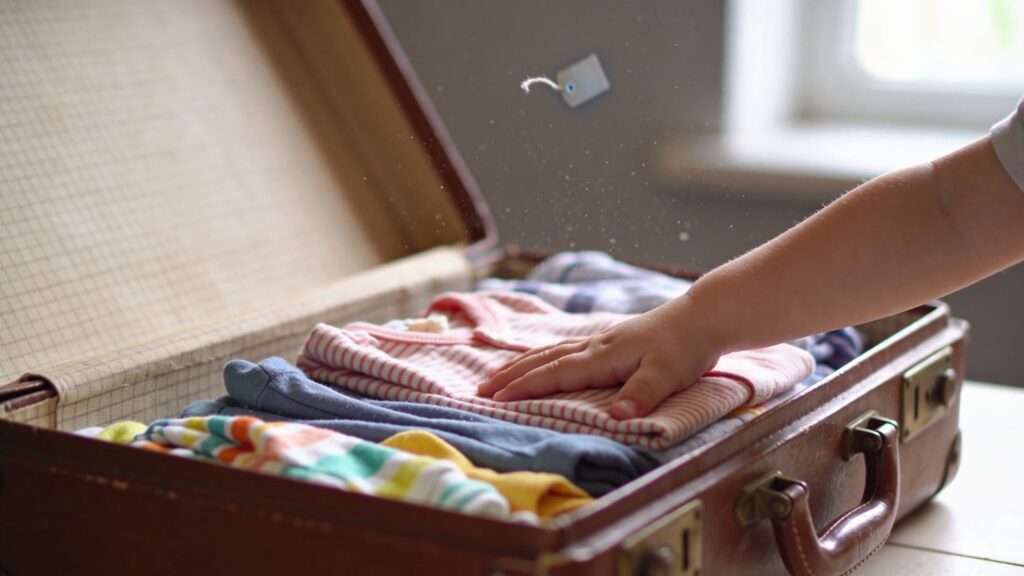
Inspection matters. Here is a systematic approach that takes under two minutes per item.
Check the fabric first. Run your fingers across the surface. Pilling signals heavy use. Thin spots, especially at knees and elbows, mean the fabric has weakened. Tug gently at seams to confirm they hold.
Look at snaps and zippers. Baby clothes use snaps constantly, and snaps wear out. Test each one. A snap that feels loose or misaligns is a recurring frustration and a functional defect. Zippers should glide without catching.
Inspect for stains in natural light. Interior lighting in thrift stores is designed to sell, not reveal. Take items to a window or outside. Check the neckline, cuffs, and front bib area, the three zones most likely to carry food or formula stains. A faint stain on a $2 item might be acceptable. A yellowed collar on an $8 item is not worth the gamble.
Check care labels. Labels should be intact and legible. Missing labels make proper washing harder and sometimes signal counterfeit goods in the case of premium brands.
Sizing Strategy: Buy a Size Ahead
This is the single most practical tip I can offer. When you thrift, buy a size or two ahead of where your baby currently sits. Sizing in baby clothing varies wildly by brand, and babies grow faster than any shopping schedule can match. Buying ahead costs nothing extra and builds a buffer that prevents frantic last-minute purchases at full retail price.
Focus on sizes 6-12 months through 2T when thrifting. Newborn and 0-3 month clothing is abundant secondhand but often the least cost-effective to seek out, because these sizes are outgrown in weeks and the savings window is narrow.
Washing and Prepping Secondhand Baby Clothes
Every secondhand item gets washed before it enters the rotation. No exceptions.
Use a fragrance-free, dye-free detergent formulated for sensitive skin. Seventh Generation Free and Clear and Dreft are both solid options. Wash on a warm cycle, which balances sanitation with fabric preservation. For items you suspect have been stored long-term, a second wash cycle adds peace of mind.
Skip fabric softener. It reduces absorbency in items like bibs and burp cloths and can irritate sensitive skin. If static is a concern, wool dryer balls handle it without chemicals.
After washing, inspect again under good light. Some stains only show fully once wet or once they have gone through a dryer cycle. Catching them now prevents disappointment later.
Key Takeaways
Buying secondhand baby clothes is a practical, proven way to clothe a fast-growing child without overspending. Stick to clothing categories with low safety risk, inspect every item systematically before committing, buy a size ahead to stay prepared, and wash everything before first use.
Start with one Facebook Marketplace search for baby clothing lots in your area today. The savings stack up faster than you expect, and the quality, when you know what to look for, is often better than buying new from a budget retailer.