Tips for Storing Kids Clothes in a Small Space
Kids accumulate clothes fast. Between growth spurts, seasonal gear, hand-me-downs, and holiday gifts, even a large closet fills up within months. In a small space, the problem compounds quickly, and what starts as a manageable wardrobe turns into a chaotic pile that wastes time every morning.
The good news is that small-space storage is a skill, and it is learnable. With the right systems, a modest closet or a single dresser can hold a surprising volume of clothing in a way that stays organized for more than a week.
Start with a Ruthless Sort
Before buying a single storage product, sort through what you actually have. Kids’ clothing has a brutal shelf life. Anything stained beyond repair, more than one size too small, or worn to near-destruction belongs out of the rotation immediately.
My rule is simple: if a garment takes up space and a child will never wear it again, it goes. Sort into three piles: keep, donate, and store for a younger sibling. That third pile should leave the room entirely and go into labeled bins in a garage, basement, or under a bed.
A good sort can cut the volume of clothing in half. That alone solves a significant portion of the storage problem without spending a dollar.
Use Vertical Space Aggressively
Most small closets are under-used from the middle up. The hanging rod sits at adult height, clothes hang down to knee level, and a large dead zone sits above the rod. Fix that.
Add a second hanging rod below the first one. Kids’ clothes are short, so two rods fit easily in the same vertical space a single rod previously occupied. This doubles hanging capacity overnight.
Install a shelf above the existing rod if one is absent. That shelf holds folded items, bins, or a row of labeled boxes for seasonal clothes. Stackable shelf risers inside the closet can also create additional layers for folded items.
Choose the Right Storage Containers
The container market is overwhelming, but a few types consistently outperform the rest for kids’ clothing in small spaces.
| Container Type | Best For | Key Advantage |
|---|---|---|
| Clear stackable bins | Off-season clothes, extras | Visible contents, no labeling guesswork |
| Drawer dividers | Socks, underwear, small items | Stops small items from mixing together |
| Hanging fabric shelves | Folded tops, pajamas | Uses closet rod space with no wall hardware |
| Slim velvet hangers | All hanging clothes | Up to 50% thinner than plastic hangers |
| Vacuum storage bags | Bulky seasonal gear | Compresses down to a fraction of original size |
Slim velvet hangers alone make a dramatic difference. Swapping out a full closet of plastic hangers for velvet ones typically frees up 30 to 40 percent more rod space. That is a real gain that costs almost nothing to implement.
Organize by Category, Then by Size
Once you have the space set up, organize with intention. Group all pants together, all tops together, all pajamas together. Within each group, arrange by size if you are storing multiple sizes for a growing child or for siblings close in age.
This sounds obvious, but most parents organize by outfit habit rather than category, which makes the system collapse within days. Category-based organization survives the chaos of a busy morning far better.
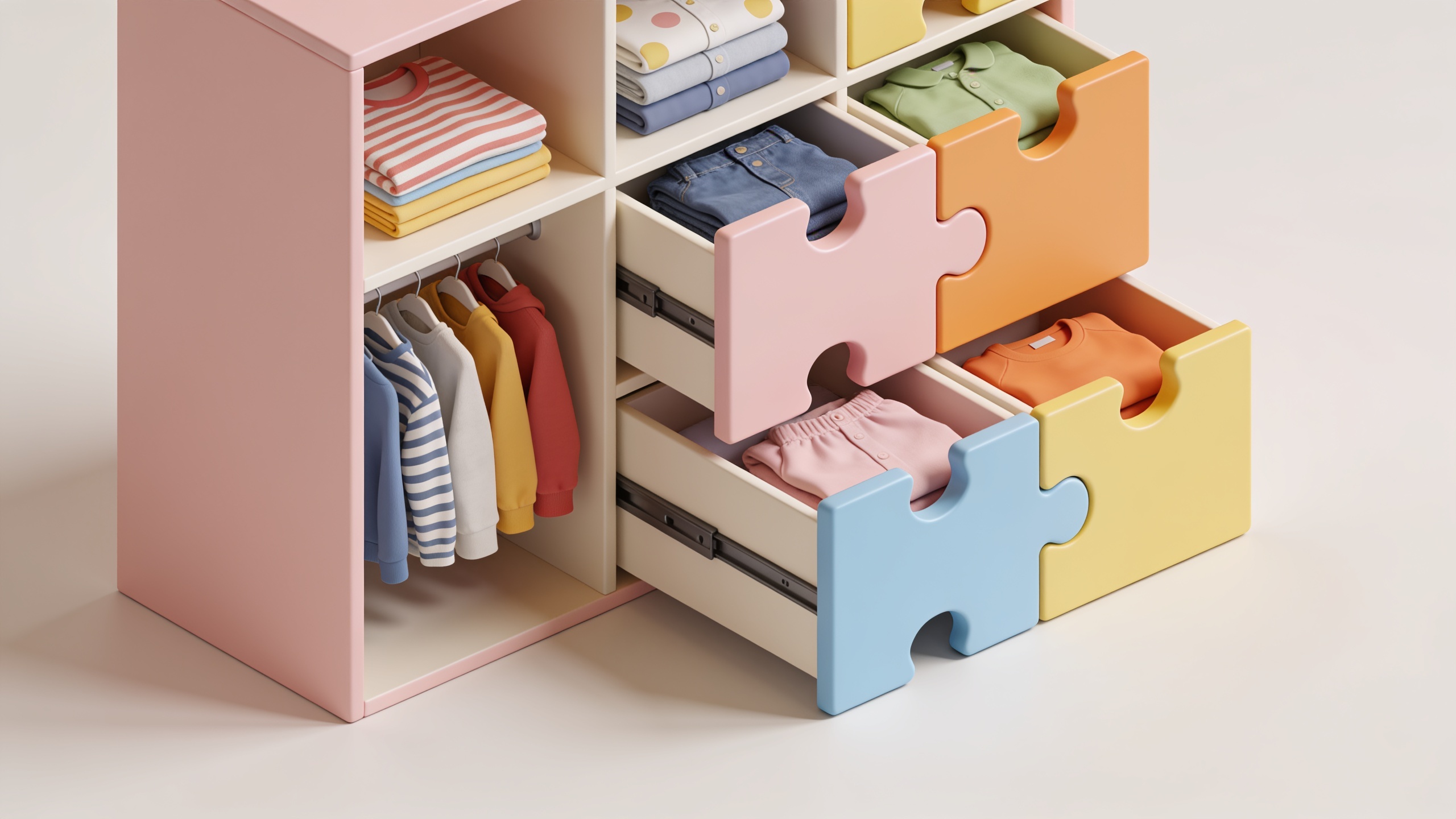
For folded items in drawers, use the vertical folding method. Instead of stacking shirts flat, fold them into small rectangles and store them standing upright in a row, like files in a cabinet. Every item stays visible and accessible, and pulling one out leaves the rest undisturbed.
Smart Solutions for Specific Problem Areas
Shoes
Shoes eat floor space fast. A wall-mounted pocket organizer on the inside of the closet door holds 12 to 24 pairs and takes up zero floor space. An over-door shoe rack works the same way. For boots, a slim row of boot organizers on the floor is tidier than a pile.
Off-Season Clothes
Off-season items should leave the primary storage area entirely. Pack them into labeled vacuum bags or clear bins with lids. Slide them under the bed in flat under-bed storage containers, or stack them on a high shelf in another closet. Label every container with the size and season so retrieval takes seconds.
Accessories
Hats, belts, scarves, and sports gear are the easiest items to lose track of. A small row of hooks at child height on the back of a door handles hats, bags, and belts. A single bin or basket corrals sports accessories in one spot so nothing disappears into a pile.
Keep the System Maintainable
Here is the part most storage advice skips: a system only works if a child can use it independently, or close to it. If your six-year-old has to ask for help every time they want a clean shirt, the system will break down.
Place the most-used items at the child’s eye level and within reach. Reserve high shelves and hard-to-access spots for seasonal items or backup supplies. Label bins with pictures alongside words for younger kids. Make putting clothes away as easy as taking them out.
Revisit the system every season. Kids grow, wardrobes change, and what worked in spring needs adjusting by fall. A 20-minute reset every few months keeps the whole thing running smoothly.
Key Takeaways
- Sort before organizing. Remove anything outgrown or unused before touching a storage product.
- Double your hanging rod, add shelving above it, and switch to slim velvet hangers.
- Use vertical folding in drawers so every item stays visible.
- Store off-season clothes in labeled containers outside the main space.
- Design the system around the child’s ability to use it independently.
Small spaces reward clear thinking more than expensive products. Get the volume under control, use vertical space well, and build a system that a tired parent and a small kid can both operate without frustration. That combination beats a custom closet every time.