
How Do You Dress Your Newborn for Outside?
Taking a newborn outside for the first time feels like a big deal, and the question of what to put on them is one every new parent wrestles with. You want them comfortable, you want them safe, and you want to avoid that moment when a stranger on the street tells you your baby looks cold. The good news is that dressing a newborn for outdoor temperatures follows a simple set of rules once you understand how infant thermoregulation actually works.
Why Newborns Need Extra Layers
Newborns lose body heat fast. Their surface-area-to-body-mass ratio is high, which means heat escapes quickly through their skin. They also lack the fat reserves and muscle mass that older children use to generate warmth. In practical terms, a temperature that feels mild to you can feel quite cool to a baby who has been in a warm room for days.
The standard guideline from pediatricians is to dress your newborn in one more layer than you are wearing. If you step outside in a light jacket, your baby needs a light jacket plus an extra layer underneath. This rule holds for both cold and warm weather.
The Layering System That Actually Works
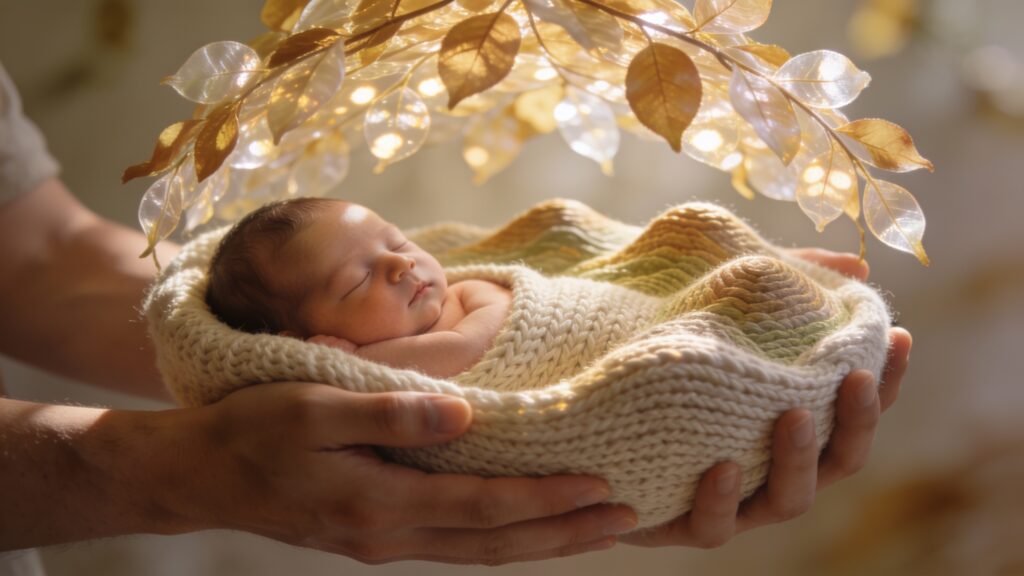
Think in three layers, each with a specific job.
The base layer sits against the baby’s skin. A cotton onesie is the standard choice. Cotton breathes well and stays soft through many washes. Merino wool is another option for cold weather because it regulates temperature across a wide range.
The middle layer provides insulation. A fleece sleeper or a cotton knit outfit works here. For very cold days, a padded one-piece, often called a pram suit or bunting, can cover this role on its own.
The outer layer blocks wind and moisture. A hooded jacket or a blanket swaddle works for mild weather. A proper infant snowsuit handles temperatures below freezing.
Head, Hands, and Feet
Babies lose a significant amount of heat through their heads. A fitted hat is close to mandatory in any weather below 70F. Soft cotton hats work for mild days, knit or fleece hats for cold ones.
Hands and feet follow the same logic. Scratch mitts double as warmth mitts in cold weather. Booties or footed sleepers keep feet covered. Once you add a pram suit or bunting, footwear is often built in.
Temperature Reference Guide
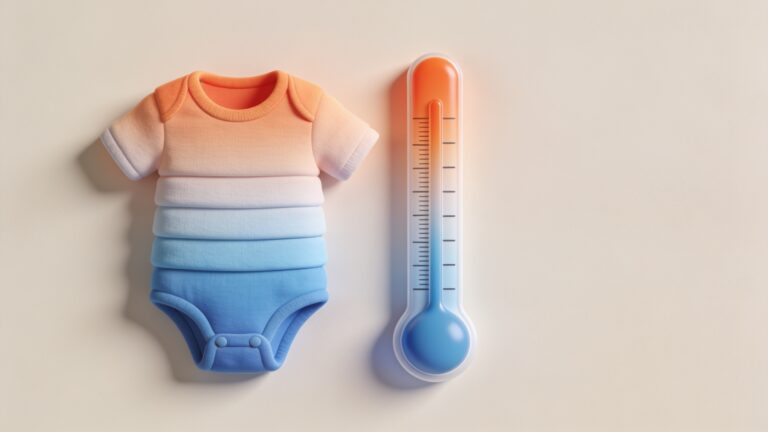
This table gives you a practical starting point. All temperatures are in Fahrenheit.
| Outside Temp (F) | What to Dress Baby In |
|---|---|
| 70 and above | Single layer onesie, light hat optional |
| 60 to 69 | Onesie plus a light long-sleeve layer, thin hat |
| 50 to 59 | Onesie, warm sleeper, fleece jacket, hat |
| 40 to 49 | Onesie, insulated sleeper, heavy jacket or pram suit, hat, mitts |
| Below 40 | Full snowsuit over base layers, hat, mitts, weather cover on stroller |
Use this as a baseline and adjust based on wind and sun exposure. A sunny, still day at 55F feels warmer than a windy, overcast day at the same temperature.
Common Mistakes New Parents Make
Getting this wrong usually goes in one direction: overdressing. Parents bundle babies in layers on a 65-degree day and then wonder why the baby is fussy or sweaty. Overheating is a real concern and has been linked to increased SIDS risk in infants. A baby who is too warm will feel hot at the back of the neck or on the chest. That is your clearest signal to remove a layer.
Here are the most common dressing errors to avoid:
- Putting a thick hat on a baby in a warm car after coming inside from the cold
- Using adult-style coats with bulky padding in car seat harnesses (padding compresses in a crash and reduces harness effectiveness)
- Skipping the middle layer on a “not that cold” day and then spending the whole walk worrying
- Leaving a blanket loosely draped in the stroller when wind picks up
On the car seat point specifically: the rule is to put your baby in the seat, tighten the harness, then place a blanket over the top if needed. Puffy coats and thick snowsuits go on after you reach your destination, not during the drive.
Checking Comfort on the Go
Once you are outside, check your baby every 10 to 15 minutes during the first few outings. The back of the neck is the most reliable spot to gauge temperature. Warm and dry means the layers are right. Sweaty means drop a layer. Cool and mottled means add one.
Babies signal discomfort through crying, but by the time they are crying, they have usually been uncomfortable for a while. Learning to do a quick physical check keeps you ahead of the problem.
Wind is the variable that catches most parents off guard. A stroller weather shield or a muslin cover over the pram adds meaningful protection on breezy days without adding heat in the same way that extra clothing does.

Key Takeaways
Dressing a newborn for outside takes a little practice, but the principles are consistent. Layers give you flexibility. The one-extra-layer rule gives you a baseline. Checking the back of the neck gives you real-time feedback.
A few final points worth remembering:
- Cotton and merino wool are the best materials for base layers
- Hats are your highest-return item in cold weather
- Overdressing is a more common problem than underdressing
- Car seat safety means no bulky padding under harness straps
- Wind matters as much as temperature
Start with these fundamentals on your first outings and you will quickly build your own intuition. Every baby runs slightly different, and after a few walks you will know exactly how your child responds to the cold. Trust the checks, adjust as you go, and get outside. Fresh air is good for both of you.