The Ultimate Guide to Baby Temperature Chart Clothes
Dressing a baby sounds simple until 3 a.m. when you’re standing in a nursery, the room feels warm to you, and you have zero idea whether your newborn is too hot or too cold. Most parents overthink this, and some get it dangerously wrong in both directions. A reliable baby temperature chart for clothes takes the guesswork out of the equation and gives you a repeatable system you can trust every single day.
Why Temperature Management Matters More Than You Think
Babies regulate body temperature far less efficiently than adults. A newborn’s thermoregulation system is still maturing, which means external clothing is doing a job the baby’s body cannot fully do alone. Overheating is a recognized risk factor associated with Sudden Infant Death Syndrome (SIDS). Underdressing in cold weather leads to energy loss, poor feeding, and excessive crying.
The standard rule from pediatricians is to dress a baby in one extra layer compared to what a comfortable adult would wear in the same environment. That rule is a starting point, and the temperature chart below makes it precise.
The Baby Temperature Chart for Clothes
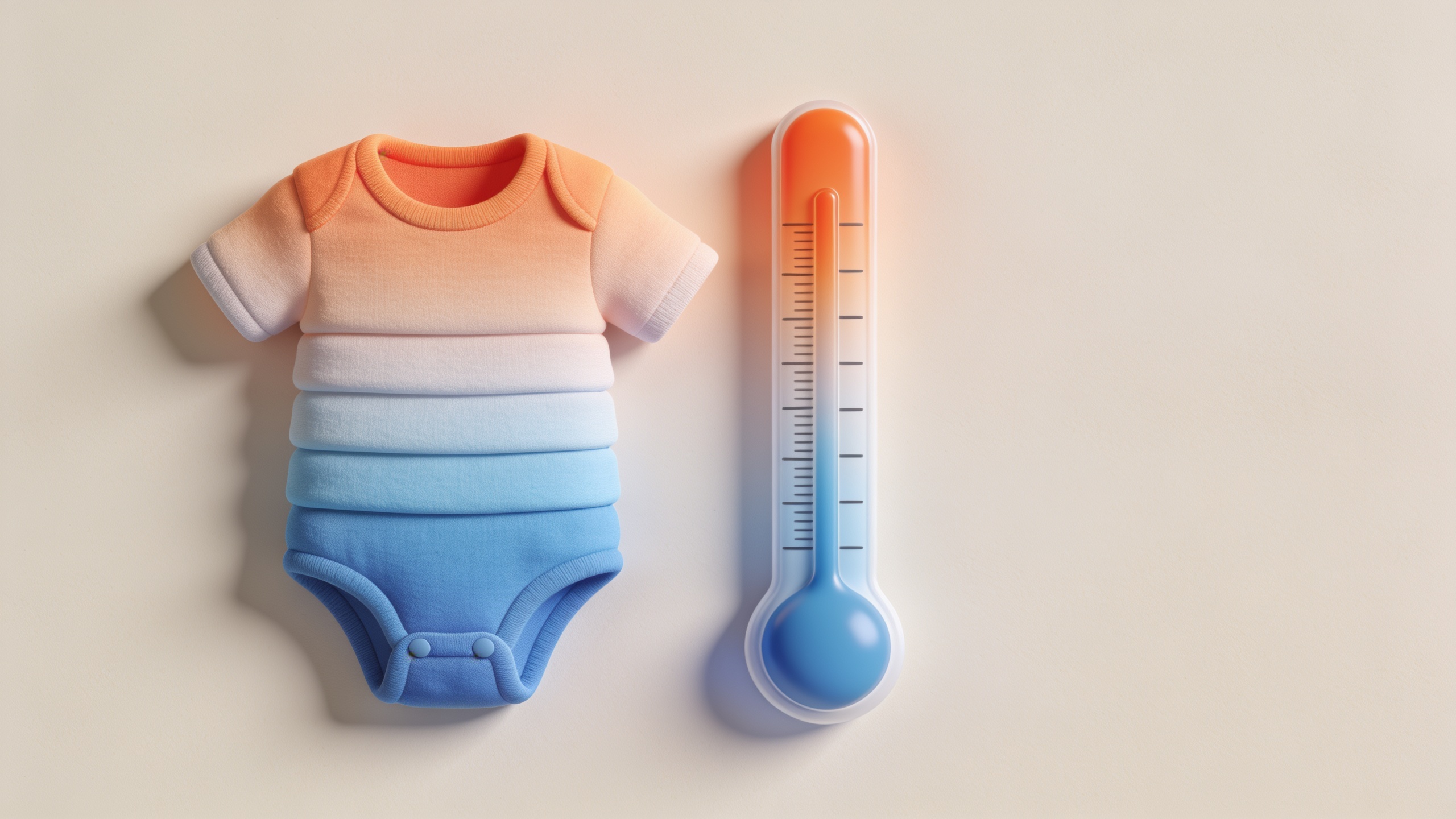
This chart covers both indoor and outdoor scenarios. All temperatures are in Fahrenheit.
| Temperature (°F) | Environment | Recommended Clothing |
|---|---|---|
| 75°F and above | Indoor / Outdoor | Short-sleeve onesie, no hat, light blanket optional |
| 70 to 74°F | Indoor / Outdoor | Long-sleeve onesie or light cotton footie pajamas |
| 65 to 69°F | Indoor / Outdoor | Long-sleeve onesie plus a light sleep sack or swaddle |
| 60 to 64°F | Outdoor | Onesie, light pants, thin jacket or fleece layer |
| 50 to 59°F | Outdoor | Onesie, pants, warm fleece jacket, hat, and socks |
| 40 to 49°F | Outdoor | Thermal onesie, fleece outfit, heavy coat, hat, mittens |
| Below 40°F | Outdoor | Full thermal base layer, heavy snowsuit, hat, mittens, blanket over stroller |
Use this as a baseline. Adjust one layer up if your baby runs cool or is a newborn under four weeks old. Adjust one layer down if you notice sweating at the back of the neck.
Reading Your Baby’s Temperature Cues
The best thermometer you have is your hand on the back of your baby’s neck or the nape, not the hands or feet. Hands and feet run cold by default in young babies because blood flow prioritizes the core. A warm, dry nape means the baby is comfortable. A sweaty or very hot nape means overdressed. A cool or clammy nape means underdressed.
Watch for these physical signals:
- Rapid breathing or flushed skin points to overheating
- Curling inward or tucking limbs tight suggests the baby is cold
- Restlessness without an obvious cause like hunger often means temperature discomfort
- A lethargic, difficult-to-wake baby in a warm room is a red flag for dangerous overheating, and you should contact a doctor immediately
Indoor Dressing: The Room Temperature Factor
Most pediatric guidelines recommend keeping a baby’s room between 68°F and 72°F. In that range, a single layer of cotton footie pajamas with a light swaddle or sleep sack is the right call for most babies under six months.
Once a baby can roll over, loose blankets become a hazard. A wearable sleep sack is the practical answer. It adds warmth without any suffocation risk and eliminates the need to guess whether a blanket has shifted in the night.
For summer months when room temperature climbs above 75°F, a single short-sleeve onesie is often enough. A ceiling fan on a low setting circulates air and helps regulate room temperature without pointing cold air directly at the baby.
Outdoor Dressing: Layers Are Your System
Layering is the most reliable method for outdoor dressing because it lets you adjust fast. A base layer handles moisture, a middle layer adds insulation, and an outer layer blocks wind and rain. You can peel a layer off in seconds if you step into a heated store or the car warms up.
For car seat safety, avoid dressing a baby in a thick, puffy snowsuit before strapping them in. Bulky material compresses in a crash and leaves the harness dangerously loose. The safe approach is to buckle the baby in a thinner outfit, then drape blankets or a coat over the harness straps on top.
Fabric Choices That Make a Difference
The material matters as much as the number of layers. Cotton is breathable and forgiving, which makes it the right choice for base layers in any season. Merino wool is an excellent mid-layer for colder months because it regulates temperature actively and stays comfortable even if it gets slightly damp.
Avoid synthetic fleece directly against newborn skin. It traps heat fast and gives you little warning before a baby overheats. Use it as an outer layer where you can see and feel the temperature change quickly.
Seasonal Adjustments and Common Mistakes
The two most common mistakes I see parents make are dressing a baby for outdoor temperature when indoors, and forgetting that car heaters warm up a vehicle fast. A baby dressed for 30°F weather sitting in a car heated to 70°F will overheat within minutes. Strip the outer layers before getting in the car and put them back on before stepping out.
In summer, shade matters more than clothing. A wide-brim stroller cover combined with a single cotton layer is far more effective than piling on light layers “just in case.”
Key Takeaways
Use these points as your quick reference every day.
- Add one layer beyond what you, as a comfortable adult, would wear
- Check the nape of the neck, not the hands or feet, to assess warmth
- Keep the nursery between 68°F and 72°F for sleep
- Use the temperature chart above for both indoor and outdoor guidance
- Remove bulky outer layers before car seat use, and cover with blankets after
- A wearable sleep sack is the safest and most practical solution once swaddling stops
Bookmark the temperature chart in this article. Print it and stick it inside the nursery closet if that helps. The goal is a system you can run on autopilot at any hour, because parenting at 3 a.m. goes a lot smoother when the clothing decisions are already made for you.