
How to Dress Your Baby for Sleep
Getting your baby’s sleep environment right takes time, but getting their clothing right is something you can nail from night one. Temperature regulation is the single biggest factor most parents overlook, and it accounts for a surprising number of disrupted nights. Dress your baby wrong and they wake up sweaty and uncomfortable. Dress them too light and they wake up cold. This guide gives you the exact framework to get it right every time.
Why Baby Clothing for Sleep Matters More Than You Think
Babies, especially newborns, are still developing the ability to regulate their own body temperature. They lose heat quickly through their heads and extremities, and they overheat just as fast if you pile on too many layers. Overheating is also a recognized risk factor in safe sleep guidelines from the American Academy of Pediatrics, so this is a decision that carries real weight.
The goal is a sleeping baby who feels warm to the touch at the chest and back of the neck, with a normal skin color. Cool hands and feet are standard in infants. They tell you very little about core temperature, so focus on the torso instead.
The TOG Rating System: Your New Best Friend
TOG stands for Thermal Overall Grade. It measures the warmth of a fabric or sleepwear item on a scale, and once you understand it, dressing your baby for sleep becomes a system rather than a guessing game.
Here is a quick reference for TOG ratings matched to room temperature:
| Room Temperature | Recommended TOG | What to Wear |
|---|---|---|
| 75°F (24°C) and above | 0.5 TOG | Diaper only or short-sleeve onesie |
| 69-74°F (20-23°C) | 1.0 TOG | Long-sleeve onesie plus light sleep sack |
| 61-68°F (16-20°C) | 2.5 TOG | Footed pajamas plus standard sleep sack |
| Below 61°F (16°C) | 3.5 TOG | Footed pajamas plus heavyweight sleep sack |
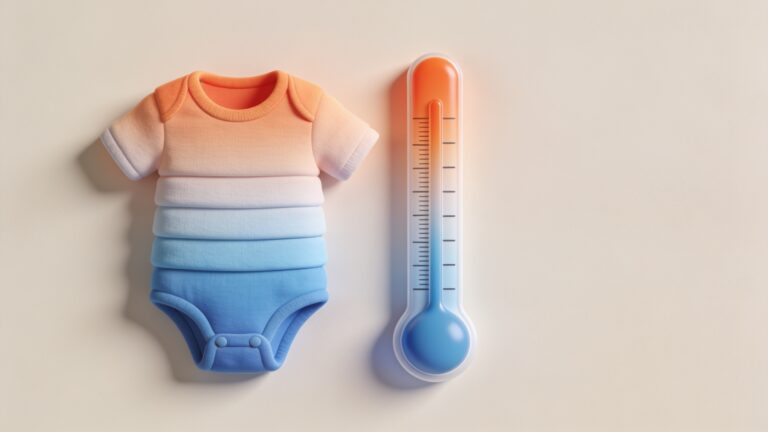
A room thermometer is a five-dollar investment that removes all the guesswork. Keep one in the nursery and glance at it before every sleep. Your instincts about room temperature are less reliable than a thermometer reading.
Layering Basics: Building the Right Sleep Outfit
Start With a Base Layer
A onesie or bodysuit is your foundation. Short sleeves work for warmer rooms, long sleeves for cooler ones. Snaps at the bottom make diaper changes faster at 3am, which your future self will appreciate. Look for 100% cotton or bamboo fabric. Both breathe well and pull moisture away from the skin.
Add a Sleep Sack Over Loose Blankets
Loose blankets in a crib are a suffocation hazard for babies under 12 months. A sleep sack, also called a wearable blanket, gives your baby warmth without the risk. You zip or snap it on, and it stays in place all night regardless of how much your baby moves.
Sleep sacks come in the TOG ratings listed above, so you match the sack to the room temperature and layer accordingly. Brands like Halo, Kyte Baby, and Woolino have built strong reputations in this category, and for good reason. Their sizing runs by weight and height rather than age, which gives you a much better fit.
Skip the Hat Indoors
Hats are for the hospital and outdoor use only. At home, a hat indoors raises core temperature too fast because babies release excess heat through their heads. Remove any hat before putting your baby down to sleep, full stop.
Seasonal Adjustments That Actually Work
Summer Sleep Dressing
In summer, most indoor spaces stay above 72°F. A single short-sleeve onesie with a 0.5 TOG sleep sack is usually plenty. If the room climbs above 75°F, a diaper alone with a very light muslin swaddle or no sack at all is the right call. A fan circulating air in the room adds comfort, as long as it blows air around the room and not directly on the baby.
Winter Sleep Dressing
Cold rooms below 65°F call for footed pajamas as the base layer plus a 2.5 or 3.5 TOG sleep sack. If your baby is in a particularly cold room, a long-sleeve onesie under footed pajamas gives you an extra layer without adding bulk around the face or neck.
Avoid the temptation to double up on sleep sacks. One well-rated sack plus a solid base layer handles most winter conditions in a normal home.
Signs Your Baby Is Too Hot or Too Cold
Reading your baby’s signals matters just as much as following the chart. Here is what to watch for:
- Too hot: sweaty chest or back of neck, flushed skin, rapid breathing, restless sleep, damp hair
- Too cold: pale skin, mottled appearance on the torso, persistent waking, body feels cool to the touch at the chest
If your baby feels warm at the chest but has cool hands, that is standard. If the chest feels clammy, remove a layer. If the chest feels cold, add one.
Swaddling Newborns: A Special Case
Newborns up to about two months old often sleep better swaddled. A swaddle mimics the snug feeling of the womb and reduces the startle reflex that wakes them. Use a thin muslin swaddle blanket and follow the “arms down, chest loose enough for two fingers” rule.
Stop swaddling the moment your baby shows any sign of rolling. That transition usually happens between two and four months. At that point, switch to a sleep sack with arms free.
Key Takeaways
Dressing your baby for sleep boils down to a short list of principles. Match clothing weight to room temperature using TOG ratings. Always check warmth at the chest and back of the neck, not the hands. Use sleep sacks instead of loose blankets for babies under 12 months. Keep hats off during indoor sleep. And adjust seasonally rather than sticking to a fixed routine year-round.
Pick up a room thermometer today if you don’t have one, and audit your baby’s current sleepwear against the TOG table above. Small adjustments often produce noticeably longer and calmer nights. That payoff is well worth ten minutes of attention.