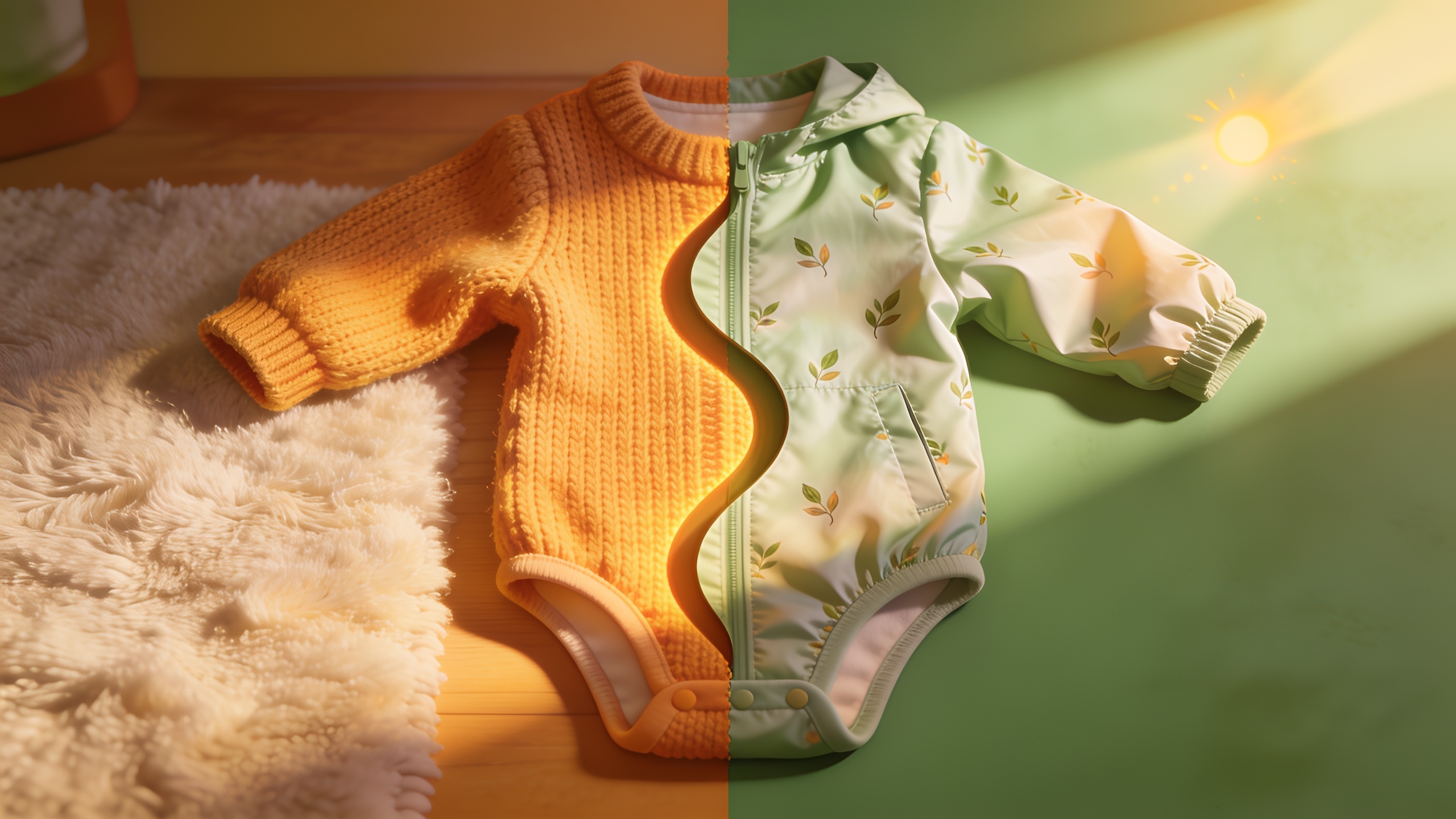
What Should a Baby Wear at Home vs Outside?
Dressing a baby sounds simple until you are standing in front of a drawer full of tiny onesies at 6 a.m., second-guessing everything. Too warm and your baby sweats and fusses. Too cool and you feel like the worst parent alive. The good news is that once you understand a few core principles, the guesswork largely disappears.
This guide breaks down exactly what babies should wear at home and outside, across different temperatures and seasons, so you can dress your little one with confidence instead of anxiety.
The Golden Rule: One Extra Layer
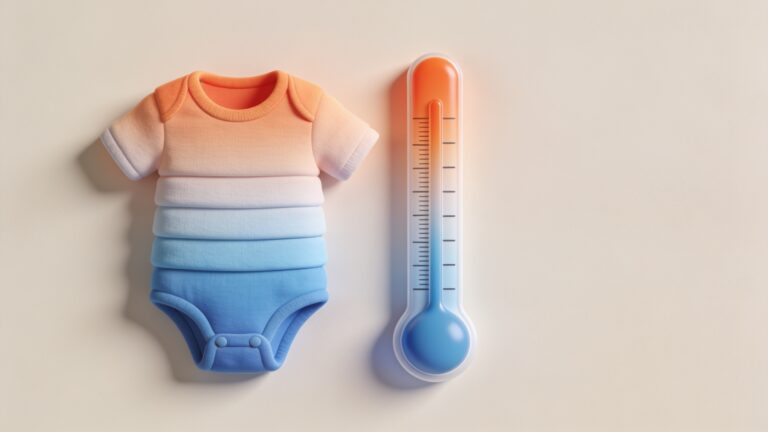
Pediatricians consistently recommend dressing a baby in one more layer than an adult would wear in the same environment. Babies, especially newborns, have limited ability to regulate their own body temperature. They lose heat fast through their heads and extremities, and they cannot shiver to warm themselves up.
A useful check is the back-of-the-neck test. Press your hand lightly against the skin at the base of your baby’s neck. Warm and dry means the temperature is right. Sweaty means overdressed. Cool means add a layer.
Dressing a Baby at Home
Home environments give you the most control, so overdressing is a common trap. Parents bundle up babies indoors because they feel protective doing it, but a warm house needs fewer layers than you might expect.
General Indoor Guidelines
A comfortable home temperature sits between 68°F and 72°F. At that range, a full-term baby over three months old typically needs just a onesie and light cotton pants or a sleeper. A newborn under three months may want a light swaddle blanket added on top.
Avoid loose blankets in the sleep space for babies under 12 months. A wearable blanket or sleep sack is far safer and does the same job.
What to Watch For Indoors
- Flushed cheeks or a sweaty neck signal the baby is too warm
- Mottled or blotchy skin on the legs can signal the baby is too cool
- Rapid breathing or unusual fussiness sometimes points to temperature discomfort
- A calm, dry, sleeping baby is almost always dressed correctly
Sleep vs. Awake Time at Home
Active, awake time generates body heat. A baby kicking on a play mat needs one fewer layer than a baby lying still. During nap time, bump back up to the standard layering formula.
Dressing a Baby Outside
Outside is where things get more variable, and where most parents need a clear system. Wind, sun, humidity, and shade all affect how a baby actually feels, regardless of what the thermometer says.
A Temperature-Based Guide
The table below gives a practical starting point for outdoor dressing. Adjust based on wind and direct sun exposure.
| Outside Temperature | Suggested Clothing |
|---|---|
| Above 75°F | Light onesie, sun hat, UV-protective clothing if in direct sun |
| 65°F to 75°F | Onesie, light pants, thin cotton layer on top |
| 50°F to 65°F | Onesie, warm pants, fleece or cotton sweater, light hat |
| 32°F to 50°F | Onesie, warm pants, fleece suit or bunting, hat, mittens, warm socks |
| Below 32°F | Full bunting or snowsuit, warm hat covering ears, mittens, warm boots or footie suit |
Key Points for Cold Weather
Car seat safety changes the outdoor dressing equation significantly. Thick, puffy coats and snowsuits compress in a crash, which means harness straps go loose. The correct approach is to put a thin fleece or light jacket on the baby, buckle the harness snugly, then drape blankets or a car seat poncho over the top.
For stroller rides in the cold, a footmuff or stroller blanket tucked under and around the baby adds warmth without affecting any safety straps.
Key Points for Hot Weather
Heat is underrated as a danger. Babies overheat faster than adults, and direct sun on a newborn’s skin is a real problem. For babies under six months, sunscreen is generally off the table because their skin absorbs chemicals more readily. The solution is lightweight, long-sleeved UV-protective clothing and a wide-brimmed hat that shades both the face and the neck.
Keep stroller canopies closed in direct sun. A mesh or cotton muslin cover over the stroller opening improves shade without blocking airflow. Check the seat itself before placing the baby in it. On a hot day, stroller and car seat fabric can reach temperatures that cause burns.
Seasonal Fabric Choices
Fabric matters as much as layers. The right material does the temperature regulation work so you need fewer adjustments throughout the day.
- Cotton is the go-to for warm weather and sensitive newborn skin
- Merino wool is an excellent all-season option because it insulates in the cold and wicks moisture in the heat
- Fleece works well as a mid-layer in cool conditions
- Avoid synthetic fabrics next to a newborn’s skin, especially if there is any sign of eczema or rash
- Look for flat seams and tagless designs to reduce friction on delicate skin
Common Mistakes Worth Skipping
The most frequent error is treating a baby’s comfort as a mirror of the parent’s comfort. Adults regulate heat well. Babies are slower to adapt. A parent who feels fine in a sweater does not mean a baby in the same room needs only a sweater.
The second common mistake is leaving hats on indoors. Babies lose excess heat through their heads, so removing the hat when you come inside prevents overheating. Keep the hat on outside, take it off the moment you step through the door.
The third mistake is ignoring cues in favor of rules. Every baby runs slightly different. Use the guidelines here as a framework, then watch your specific baby and adjust.
Key Takeaways
Dressing a baby well comes down to three habits. First, always add one layer more than you personally need. Second, check the back of the neck regularly and adjust when you feel sweat or coolness. Third, match your fabric choice to the season and the activity.
Start with these habits and you will find that dressing your baby becomes one of the easier parts of the day. Trust the system, watch your baby’s cues, and adjust confidently. That combination beats any checklist.