How Many Clothes Does a Child Actually Need?
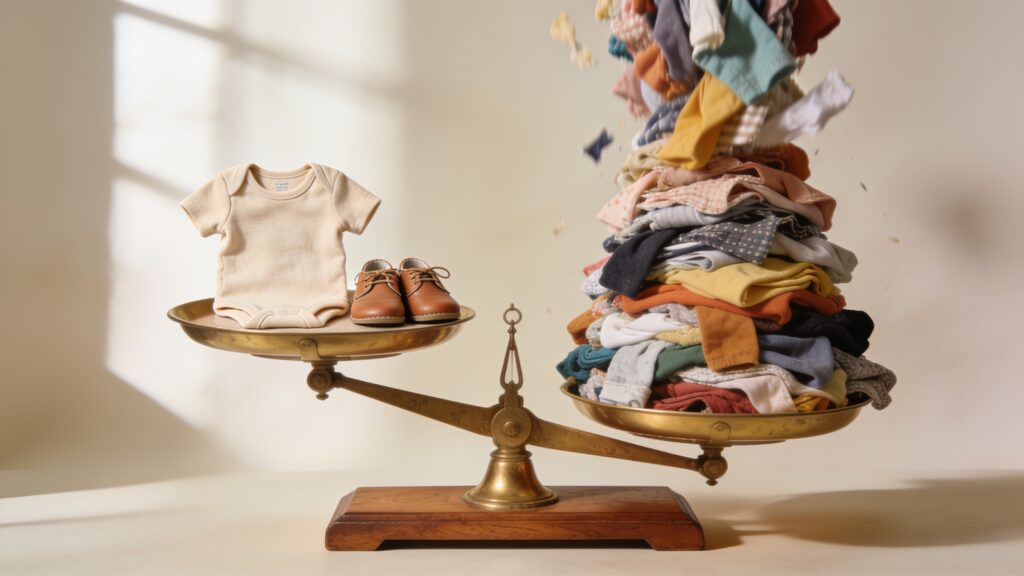
Most parents buy too many clothes for their kids. I know because I did it with my first child, and I watched a full dresser of barely-worn outfits get donated six months later when he outgrew everything. The honest answer to this question is probably half of what you own right now, and this article will show you exactly how to think through it.
The Real Problem With Overstocking
Kids’ clothing is cheap, cute, and constantly on sale. That combination makes it easy to buy more than you need. But every extra outfit takes up space, makes laundry sorting harder, and gets outgrown before it ever gets worn.
The goal is a working wardrobe, one where every item gets used, washed, and cycled through regularly. Clothes that sit at the bottom of a drawer are wasted money and wasted storage.
A Practical Formula by Age Group
The right number of clothes depends on age for one simple reason: laundry frequency. Babies soil multiple outfits per day. A 10-year-old in school might wear one outfit all day without incident. Start with age, then adjust for your specific lifestyle.
Babies and Toddlers (0 to 2 Years)
This age group needs more because accidents and blowouts are constant. I recommend keeping 7 to 10 complete outfits as your base. That gives you enough buffer for a full week if laundry runs every 5 to 7 days, plus a few spares for the inevitable disasters.
For babies specifically, buy almost nothing in newborn size. Most newborns outgrow that size in two to four weeks. Buy in the 3-month size and move quickly to 6-month.
Young Children (3 to 7 Years)
This is the sweet spot where a leaner wardrobe works well. Kids this age get messy but rarely need multiple outfit changes in a single day. A solid base of 5 to 7 everyday outfits covers most families doing laundry once a week.
Add two or three “nice” outfits for events, and you have a complete wardrobe. That is it.
Older Kids and Tweens (8 to 12 Years)
Kids this age develop preferences and opinions about what they wear. Some items will get worn constantly, others will sit untouched. I recommend involving them in the process and buying fewer pieces that they actually like, rather than more pieces that sit ignored.
The same 5 to 7 everyday outfit rule applies here.
The Core Wardrobe Breakdown
Here is a table that works as a practical starting point for one season. Adjust up or down based on your laundry schedule.
| Item | Toddler (0-2) | Young Child (3-7) | Older Child (8-12) |
|---|---|---|---|
| Everyday tops | 8-10 | 5-7 | 5-7 |
| Everyday bottoms | 6-8 | 4-6 | 4-6 |
| Pajamas | 4-5 | 3-4 | 3-4 |
| Underwear/socks | 10-14 | 7-10 | 7-10 |
| Dressy outfits | 2 | 2 | 2 |
| Outerwear (jacket/coat) | 1-2 | 1-2 | 1-2 |
| Shoes (total pairs) | 2-3 | 2-3 | 3-4 |
These numbers reflect a once-weekly laundry routine. If you wash twice a week, you can trim each category by two to three pieces without any inconvenience.
What Actually Drives Your Number
Once you have a baseline, four factors adjust it up or down.
- Laundry frequency. Washing twice a week means you carry less stock. Washing once every ten days means you need a bigger buffer.
- Childcare or school requirements. Some daycares go through two outfits a day. Others are clean. Ask before you buy.
- Climate and seasons. A child in Minnesota needs a serious coat, snow pants, and thermals. A child in Florida moves through seasons with far less gear.
- Activity level. A kid in soccer, swimming, and art class needs sport-specific gear that adds to the total. A kid who prefers reading at home does not carry that load.
How to Audit What You Already Have
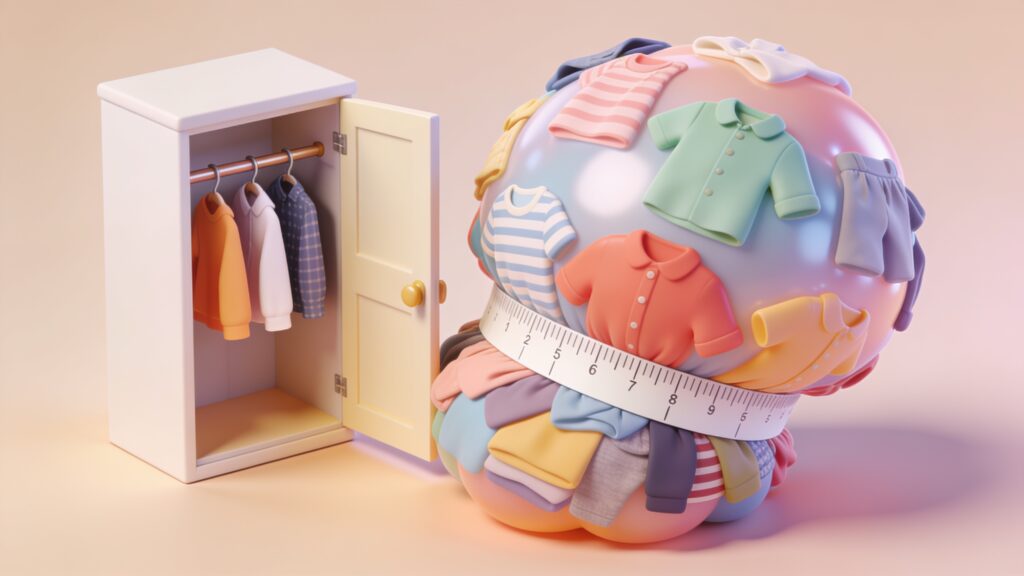
Before buying anything, go through what your child owns right now. Pull every item out and sort it into three piles. The first pile is “fits and gets worn.” The second is “fits but never worn.” The third is “outgrown or damaged.”
Donate the second pile immediately. If it has been sitting there for three months and your child skips it every time, it will keep getting skipped. The second pile is where most parents discover they already have too much.
Seasonal Storage and Rotation
One wardrobe mistake I see constantly is keeping all seasons in the closet at once. A drawer full of summer shorts makes winter mornings chaotic when the child keeps pulling out the wrong thing.
Pack off-season clothes into labeled bins and store them out of reach. This keeps the daily wardrobe tight, speeds up getting dressed, and makes it far easier to see when something is actually running low.
The Buy Less, Buy Better Rule
Cheap fast-fashion kids’ clothes wear out fast. A five-pack of shirts from a discount bin often looks worn after ten washes. A slightly more expensive shirt from a quality brand holds its shape, color, and structure for a full season.
I buy fewer pieces at a higher quality point and get better results every time. Hand-me-downs from quality brands still look good. Hand-me-downs from discount purchases often look like rags.
Key Takeaways
- 5 to 7 everyday outfits covers most children aged 3 and up when laundry runs weekly.
- Babies and toddlers need more, roughly 7 to 10 outfits, because of higher soil rates.
- Audit your current wardrobe before buying anything. Most families already have enough.
- Store off-season clothes separately to keep daily choices clean and easy.
- Buy quality over quantity. Fewer, better pieces outperform a packed-full dresser every time.
Go through your child’s wardrobe this week with the audit method above. You will almost certainly find you can donate a bag’s worth of clothes and feel better organized for it, not more stretched. A tight, well-chosen wardrobe makes mornings easier, laundry faster, and storage simpler. That is a win for everyone in the house.